
The Basilisk’s Bargain
Morning in Riftcrag dawned with the kind of grim resolve that only a group of sleep-deprived, monster-hunting adventurers can muster. Our first quest: acquire the fabled basilisk eye for Triss’s remedy. We all agreed we’d rather face fangs than the combined disappointment of a comatose paladin and a disappointed healer. But how to lure a basilisk? The answer, as always, turned out to be livestock.
The barkeep, between polishing mugs and dispensing unsolicited advice, directed us to a clutch of farmsteads outside town. We became connoisseurs of rural livestock by the third attempt, finally purchasing an old sheep and a spry lamb from a father-son duo who seemed delighted to be rid of both for a single gold coin. Ender, who could bench-press a cow, hoisted our new companions under each arm with the gentle care of a man handling future bait.
Haste pressed us onward—Phlegan awaited, and Ender was the very portrait of dwarven urgency, grumbling about “wasting daylight” as we advanced toward a stony hill bristling with warning signs. Here, at the base, we met tragedy: three mourners, a mother, father, and boy named Frand, wept for their lost Arette, who had gone to slay the basilisk and, by all evidence, had not returned.
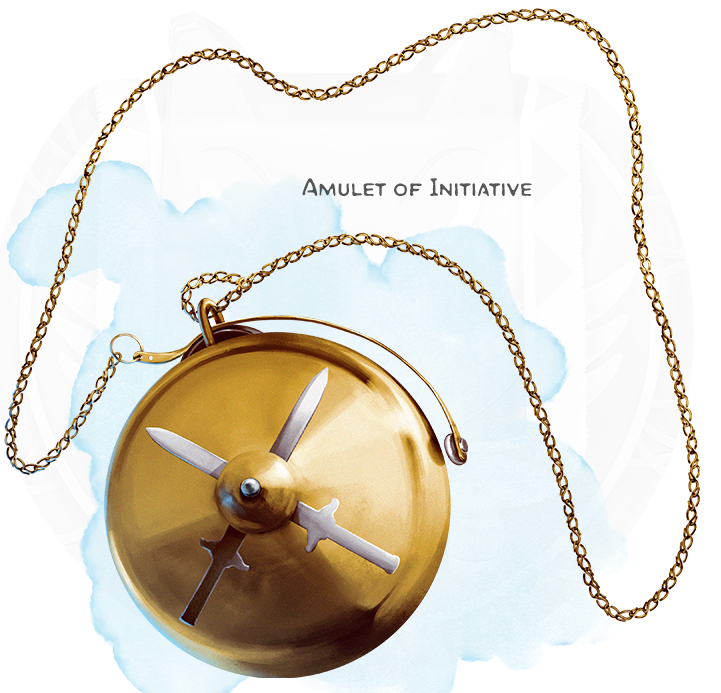
Frand handed Ender a small, circular, gray amulet. At first a mystery, it revealed itself as a tiny bell—an amulet of initiative, or, as I privately dubbed it, an “alarm bell for the unwise.”
We left our horses—and, it must be said, our new sheep friends—under the mourners’ wary eyes and ascended the rocky path. The cave mouth, framed by a semicircle of stone, was flanked by grisly statues: the basilisk’s victims, twisted in tableaux of horror and eternal surprise. Sheep in hand, Ender strode forward and set our bait before a large boulder fifty feet from the cave.
No sooner had the sheep started their nervous bleating than the basilisk slithered into view—eight feet of muscle, scales, and baleful, unblinking eyes. Crow scaled the ridge with the effortless grace only elves possess, while I found a tree that looked just sturdy enough to hide behind. Ender, the brave soul, ducked behind the boulder, a dwarf-shaped lump of resolve.
The sheep, proving themselves more nimble than wise, danced just out of snapping jaws. Ender fired a poison dart, which lodged in the creature’s side with all the impact of a pebble at a parade. Crow’s arrow followed but failed to entangle the beast. I, drawing on the fickle favor of the Feywild, hurled a radiant bolt and was rewarded with a snarl—but not a retreat.
What happened next will surely be the subject of ballads: the lamb, in a fit of blind luck or suicidal bravado, leapt onto the basilisk’s back, bleating like a banshee. The basilisk twisted and stomped in a reptilian tantrum, unable to dislodge its passenger. Crow, taking full advantage of the distraction, invoked a hunter’s mark and sent another arrow streaking, this one crackling with psychic force. The basilisk staggered and collapsed, the lamb hopping from its back as if it had merely alighted from a coach, and began munching grass as if nothing had happened.
Even prone, the basilisk was a slippery target. Crow’s arrow missed, my crossbow bolt thudded harmlessly into loam, but Ender—oh, bless him—called down divine fire, enveloping the beast in radiant flame. It rallied, dragging itself caveward, but we finished the job with arrows from a safe distance.
Inside the cave, among the carnage, we found poor Arette. She was indeed petrified—and, heartbreakingly, in two pieces.
Removing the basilisk’s eye proved a matter of muscle over finesse. Ender, unable to puzzle out the finer points, borrowed Crow’s shortsword, and with dwarven pragmatism, removed the entire head. Sometimes the direct approach is best.
Down the hill we descended, sheep in tow, to deliver grim news and a trophy head to Arette’s family. It wasn’t the reunion they’d hoped for, but they thanked us with the weary gratitude of those who have seen too much.
The Waystones at Twilight
With basilisk head and sheep-scented armor, we turned our minds to the next quest: mindthorns for Mora’s remedy. Time pressed, but fortune smiled on us as twilight fell and we stumbled upon a circle of ancient waystones at the forest’s edge—a sight that sent a shiver of relief through my bones. These silent, rune-carved monoliths—dusted with moss and etched with age—have long served as beacons and sanctuaries for travelers wary of what lurks in the wilds. I remembered, with a pang of nostalgia and dread, the night Crow and I once spent at the waystones outside Molag, where shadows shimmered and secrets whispered in the runes.
Here, in Phostwood’s shadow, the stones offered the same quiet magic: the air stilled, and the unsettling chorus of the swamp faded to a hush. We camped in their protection, sleeping dreamlessly for the first time in days, as if the stones themselves stood vigil while we huddled close to the fire.
Into the Heart of Phostwood
Morning found us well-rested—and then immediately regretting leaving the stones behind. Phostwood is a world apart from any forest I’ve known, a labyrinth of murky light and perpetual damp. The trees grow too close, their bark slick with lichen and their roots entombed in velvet moss. The air is heavy, almost wet, clinging to the skin with the intimacy of a fever. Every sound is too near: the constant amphibian chorus, the whine of insects like tiny saws, the distant whoop of hidden beasts, the ceaseless drip of condensation from leaf to leaf. The canopy blocks all but the weakest sunlight, turning the world green and gray beneath.
We picked our way over tufts of grass, hopping from stone to root, careful to avoid the muck that threatened to swallow boots and dignity. Crow, of course, made it all look effortless—his passage silent, deliberate, as if he knew the secret handshakes of every vine and branch. Ender and I, on the other hand, thrashed along behind him like a pair of overdressed oxen lost at a masquerade ball.
Crow stopped us abruptly, eyes fixed on a patch of shadow. I squinted, saw nothing, and then—there they were: three massive spiders, upside down on trunks twenty feet away, their furry legs twitching as they scanned for prey. We crept past, hearts pounding, thanking every benevolent forest spirit for Crow’s senses.
As the hours passed, the strangeness of the Phostwood only deepened. It was a place where the familiar rules of wood and wild did not apply. Even the light felt foreign—filtered and uncertain, as if the forest itself resented our intrusion.
The Search for Mindthorns
It was Crow who at last spotted the first mindthorn: a clutch of wickedly barbed vines snaking around the base of a gnarled tree. Ender tossed him the extraction tool, and Crow sprang onto the roots with practiced agility. The first attempt was not his finest—one thorn broke in his hands, its essence lost to the bog. Crow’s muttered Elvish curses suggested this was a rare failure, but he recovered, delicately extracting the next two without incident.
He signaled us onward: the next tree, a twisted sentinel halfway submerged in a stagnant pool, was wrapped with three more mindthorns. Crow’s deft hands made quick work of the first—snip, into the pouch. The second joined it, but the third, perhaps sensing its fate, snapped and fell into the mud, lost. “That’s two broken,” Crow grumbled, his pride dented. But with four mindthorns safely gathered, we pressed on.
Ender, ever the optimist, spotted another tree thick with vines across a clearing. He started forward, but Crow, with a rare note of urgency, pulled him back. In the clearing, hunched around a smoldering firepit, were three croakers—amphibious humanoids, skin slick and warty, their eyes bulbous and unblinking. They looked, for all the world, like nightmares that forgot to finish dressing.
Battle in the Bog: The Song of Marshy Doom
We retreated a few paces, whispering plans. Feywild magic beckoned, so I called up a cloud of faerie fire, bathing the croakers in a violet glow. They staggered awake, blinking in confusion. Two collided with each other, knocked flat, just as Crow’s lightning dagger flashed—and, for the first time, missed its mark, vanishing into a patch of reeds near a pond. “Aargh!” he groaned, and a less charitable soul might have called it “bardic karma” for earlier remarks about sheep.
Ender surged in, maul blazing with radiant light, and brought it down on the lone standing croaker, skull cracking with a sickening crunch that sprayed blood across the moss. The second dazed frogman barely had time to croak before Ender slammed his maul into his midriff.
But then the fight changed. A new croaker erupted from the shadows—a shaman, taller and broader than the others, cloaked in ragged green reeds and adorned with a necklace of bones and beetle carapaces. His webbed hands gripped a carved staff, and his bulbous eyes rolled back as he chanted: “Rooglag!” A wave of healing magic washed over the battlefield, broken croaker warriors suddenly springing back with renewed vigour, wounds knitting, spears rising.
The shaman’s next incantation—“Alaar Plat!”—sent a pulse of pain through Ender and Crow, doubling them over, coughing and clutching at their sides. Crow’s eyes widened. “That’s the Song of Marshy Doom,” he spluttered, recognizing the shaman’s melody—a dire tune known to every ranger who ever crossed a swamp. “Kill the healer” he shouted as he staggered back, shaking his head and instinctively reaching for the healing potion gifted by mad Gazbar. He gulped it down as he crawled away from the heat of battle, while Ender, unfazed by pain or logic, finished off a croaker with a resounding blow followed by a smite. I ducked behind a fallen log and waited for my chance.
The shaman, desperate, waved his staff and tried to rally his failing allies, but Ender and I flanked a remaining croaker. Ender knocked him prone with an elbow, and I slipped my dagger into his chest with a flourish worthy of the finest stage.
The shaman, realizing escape was impossible, turned to flee, only to find himself blocked on all sides. “Googlu…!” he croaked, but his final spell was cut short—Crow’s shortsword found the soft spot between his shoulders, silencing both shaman and song.
We sat in a circle, breathless and spattered with mud and blood, the croakers’ camp now ours. The forest’s din returned, louder than before, as if the Phostwood resented the stillness we had forced upon it.
It was Ender who stood first, shaking the muck from his beard. “Enough,” he said. “Let’s finish what we came for. And Crow, if you want your dagger back, you’d best get searching—unless you’d rather borrow my maul.”
We all agreed. And so, battered but victorious, we pressed on—proof that, for this particular band of heroes, a little teamwork (and a lot of luck) goes a long way, even in the strangest corners of the world.